Portrait · Femmes
Wine in the feminine
How women are reshaping viticulture on the Luxembourg Moselle
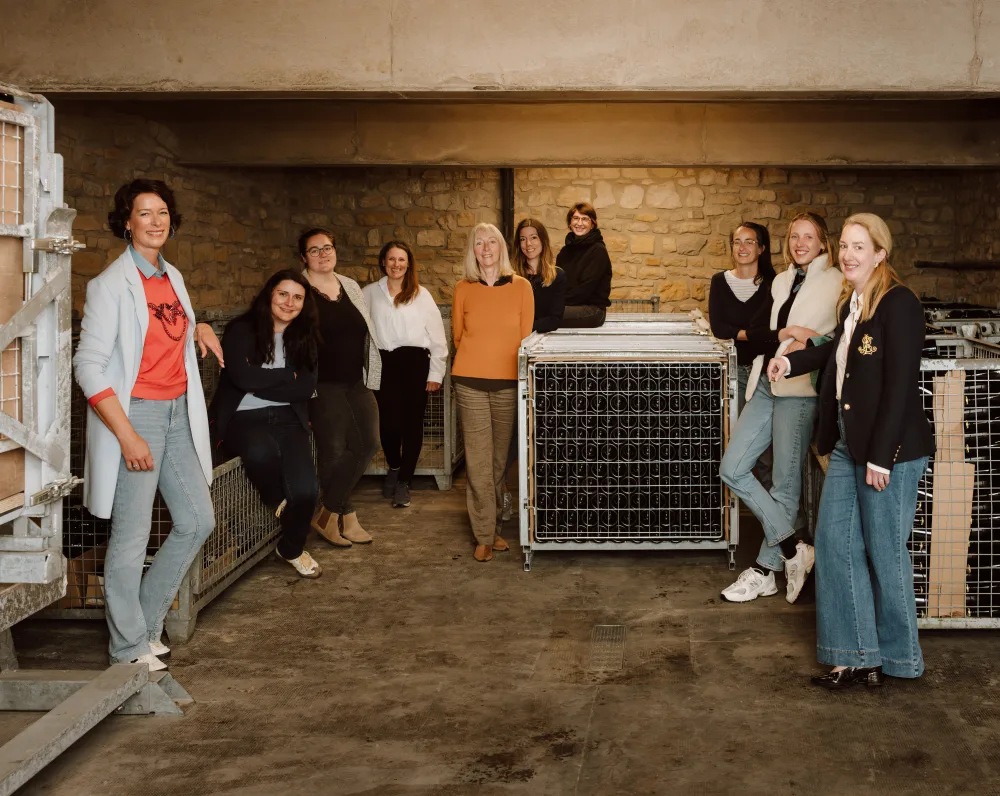
There are days along the Luxembourg Moselle when time seems to stand still. The light falls softly across the hillsides, the vines remain motionless, and everything appears as though nothing has changed here for decades. The same villages, the same vineyard sites, the same names on the signs of the wineries. But anyone who looks a little closer will notice: that is no longer entirely true.
Behind those familiar names are different faces today. Younger ones. And strikingly often: female faces. More than ten women currently run wine estates along the Moselle, in a wide variety of roles—as business owners, cellar masters, oenologists and organisers. Some come from long-established winegrowing families, while others come from completely different worlds. One was a lawyer, another a psychologist, another a landscape architect. One arrived from Champagne for an internship and stayed. What connects them is not where they come from, but where they are today: all of them are helping to transform an industry that for generations was passed from fathers to sons. Quietly, but unmistakably.
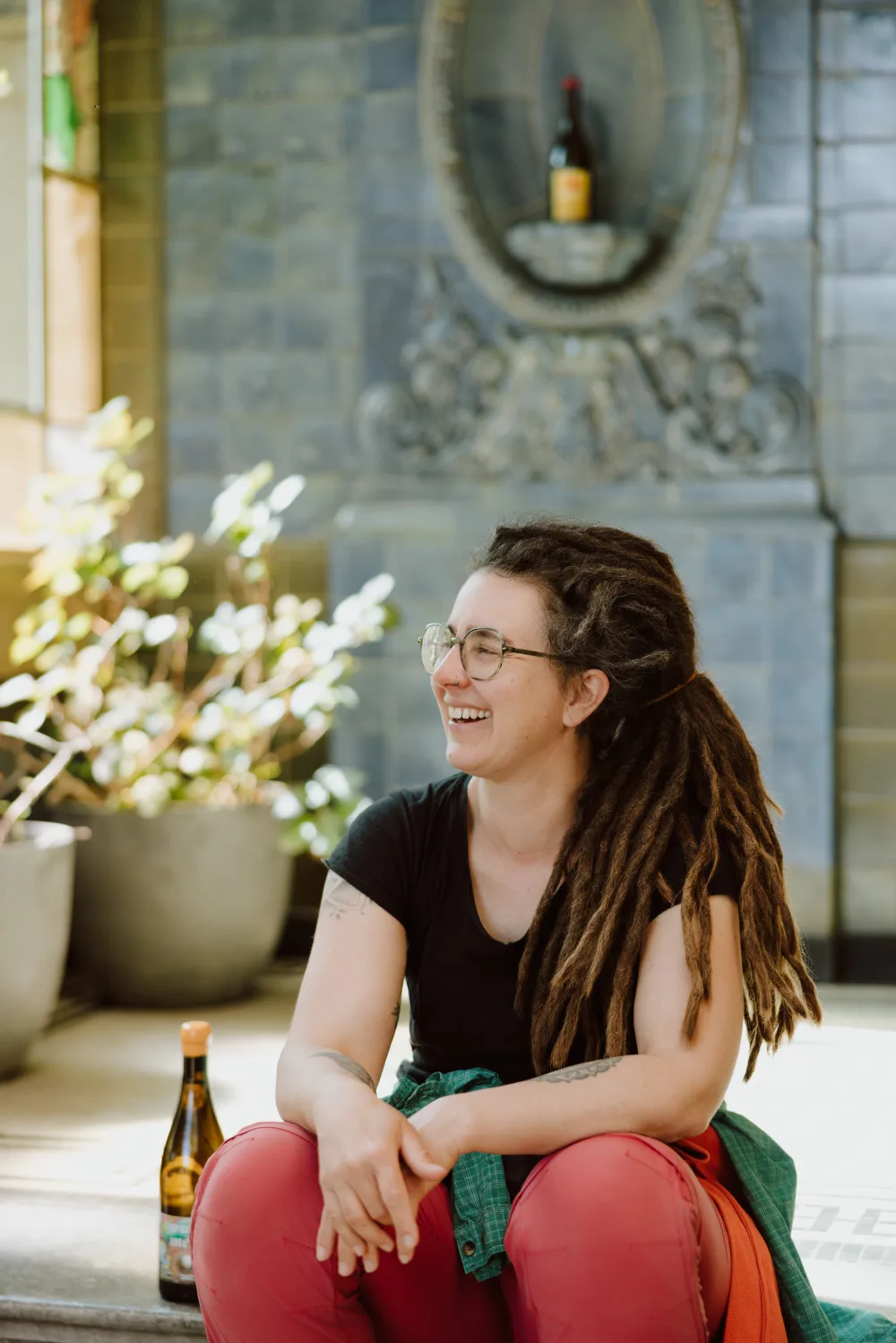
“ I make the wine that I enjoy drinking, not the wine others would like me to make.”
Ten paths, one direction
Ask them how they found their way into wine, and you will receive ten different answers. And that is precisely where the story lies.
Take Anouk Bastian of Domaine Mathis Bastian in Remich, for example. She knew it from an early age. “At the age of ten, I said: one day, I’m going to take over this estate.” Even so, her path first led her through law school and then to two years in a law firm. It never truly felt right. She wanted to bring people together, not set them against one another.
Lisa Vesque of Domaine Cep d’Or in Stadtbredimus made her decision at the age of fifteen, despite teachers at her lycée telling her that winegrowing was not a profession for women. What gave her confidence was an internship in Germany’s Middle Rhine region with a female winemaker who ran a similar estate. “She was always a role model for me. I wanted to be as strong as she was.”
For Carole Bentz, the journey took longer. She spent eleven years gaining experience in the private sector and public administration before returning to the family estate, Domaine Claude Bentz in Remich, at the age of 35. The decisive factor was the feeling that she was not in the right place in an office environment. Her desire to be closer to customers and to wine itself grew stronger and stronger. Her father initially reacted with caution, warning her against giving up a secure position, especially as a mother. Nevertheless, she consciously chose to make a fresh start.
Michèle Mannes of Domaine Häremillen in Ehnen studied landscape architecture and quickly realised that an office job was not for her. When she decided she wanted to join her father in the family business—a professor of economics who had founded the winery in 1978 purely out of passion—the family needed some convincing. Private enterprise is not easy, a profession involving alcohol is not easy, and a maledominated profession even less so. Three arguments against it in a single breath. She has disproved all three.
Isabelle Gales of Caves Gales in Remich found her way back via Paris. An art historian by training, she was living in France when the question eventually arose: stay or return? Her father had never put any pressure on her. On the contrary, he always told her that if she wanted to pursue something else, that was perfectly fine. That made her decision to return to the Moselle all the more free and personal.
Laurence Duhr’s story is quite different. As the daughter of Abi Duhr, expectations were high, yet she initially wanted nothing to do with winegrowing. Instead, she chose to study psychology, convinced it was the right path for her. But the deeper she went into her studies, the more she was troubled by the discipline’s focus on deficits and problems. So she decided to give wine a chance and went for an internship with Reinhard Löwenstein on the German Moselle. Three months turned into three years. “He gave me an approach to wine that had nothing to do with what I already knew. There, I could simply be myself.”
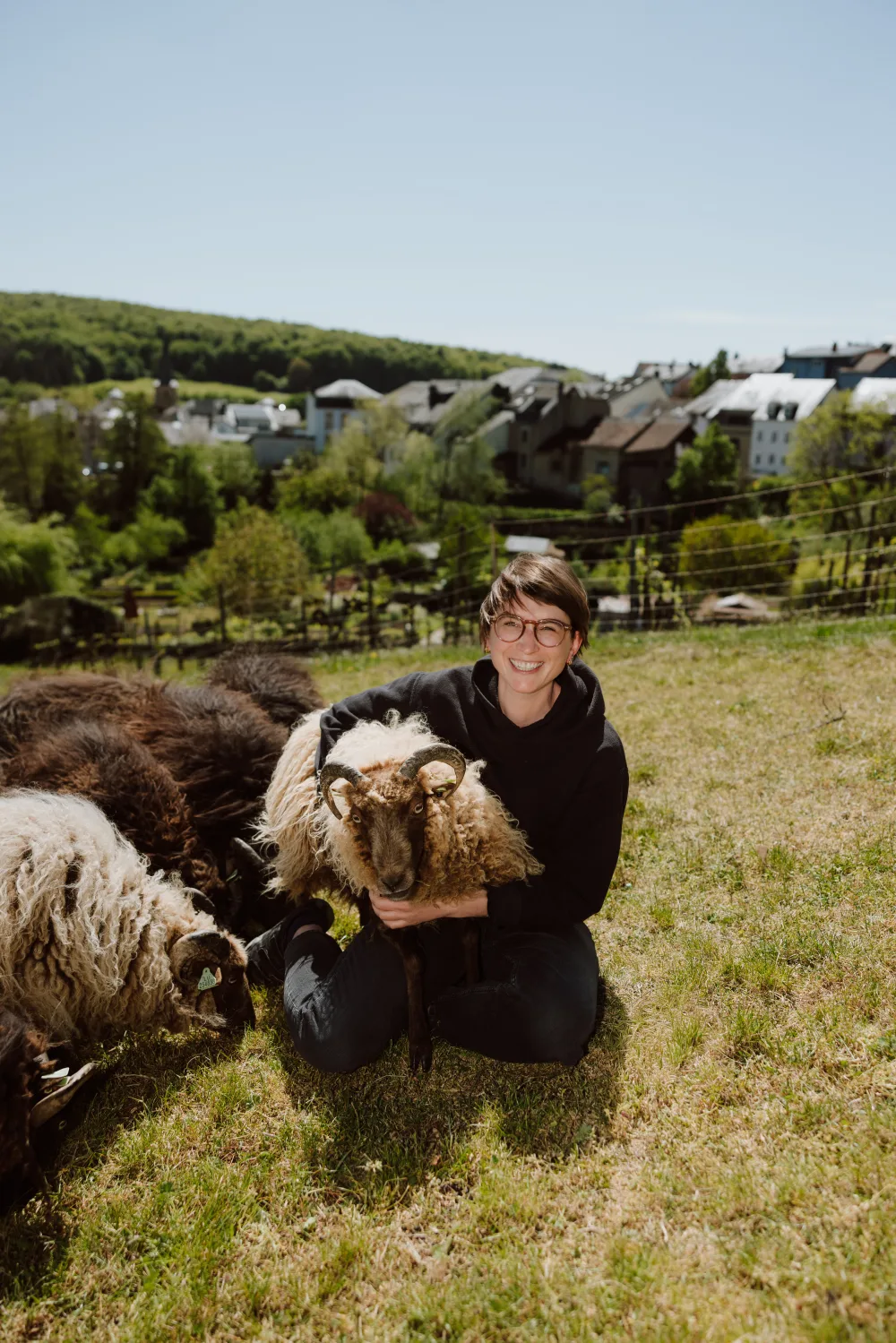
“I have never met anyone who didn’t like Auxerrois.”
Corinne Kox of Domaine L & R Kox in Remich found her way into the family business almost by accident. After completing a PhD in molecular biology, she worked for several years at a German television broadcaster before eventually being drawn back to Luxembourg. For a long time, she viewed viticulture critically, particularly because of monoculture and the often-limited interaction with nature. At some point, however, she asked herself a simple question: “Criticising is easy—why not try to do it better?” Since then, she has embraced vitiforestry, integrating trees and other plants into the vineyards to enhance biodiversity and make the vines more resilient to climate change.
Charlène Muller, Cellar Master at Vinsmoselle in Grevenmacher, came to Luxembourg from Champagne for what was supposed to be a three-month stay. That was twenty years ago.
Marie Kox of Domaine Sunnen-Hoffmann in Remerschen, meanwhile, did not dream of vineyards as a child. The idea only came later, while studying in the science section during her final years of secondary school. The decisive moment was an internship in Châteauneuf-du-Pape, where she encountered a young Cellar Master in her early thirties confidently running a male-dominated winery. “That was when I realised it was possible.” What connects these women is not their path, but their determination. At some point, each of them said: This is who I am. And they stayed true to it.
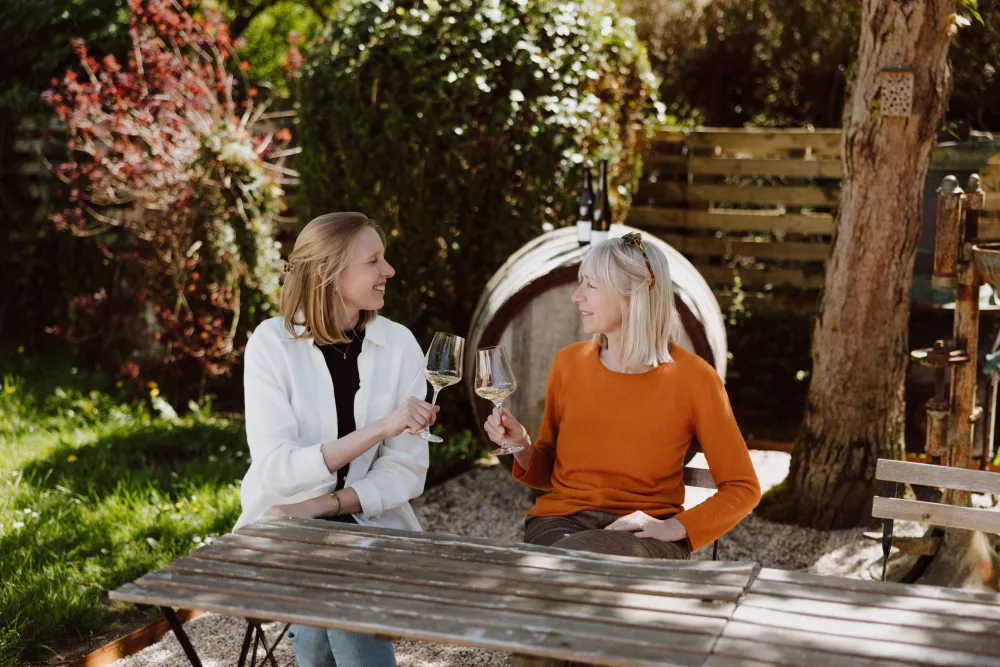
“ It’s not enough to make a good wine. We also have to be able to sell it.”
“Everyone needs to have their own area of responsibility. That makes compromise easier.”
Fresh winds, old vines
What changes when these women take over a winery cannot be summed up in a simple formula. But something does change.
When Carole Bentz returned to the family estate, she found a winery with a strong tradition and a clear identity, one that had relied for many years on continuity and established structures. She began to develop the estate carefully and thoughtfully: social media, a presence at wine fairs, an expanded portfolio including a Crémant Brut and a barrel-aged Chardonnay, a new pavilion designed by her sister Jil, and a diverse programme of art events, weddings and corporate functions. “We want to carry forward what has proven its worth while also exploring new paths,” says Carole. She sees visibility, personal encounters and new formats as complements to the traditional work of the winery.
Lisa Vesque and Anouk Bastian have chosen a somewhat different approach. Both focus on gradually opening up their estates, making them more visible and accessible without altering their foundations too drastically. “I want to intervene less and let the wines speak for themselves,” says Lisa. When her father began producing Crémant in 1995 with just under 2,000 bottles, it was a small part of the business. Today, it accounts for almost half of the estate’s production. Lisa has planted Meunier, a grape variety she was determined to include in her range, and generally vinifies her wines slightly drier than before. For both women, it is a matter of evolution rather than disruption. Events and close relationships with customers are part of the equation, but always at their own pace and in an authentic way.
Isabelle Gales and Laurence Duhr have each created a wine that is deeply personal. Together with her brother Georges, Isabelle has introduced many new products over the past ten to fifteen years. Among them is her greatest pride: Pas de deux, a barrelaged blend of Auxerrois, Chardonnay and Riesling, named after the partnership she shares with her father. “Together, we want to move into a new era,” says Isabelle. Laurence, meanwhile, has created her own space for experimentation with Vullemetti, a blend of Rivaner and Gewürztraminer unlike anything else produced on the Moselle. By her own admission, the first vintage was disastrous. Three years of ageing and a revised blend later, it finally worked—helped in no small part by a label that makes customers smile. “I make the wine that I like to drink, not the wine others would like me to make,” says Laurence.
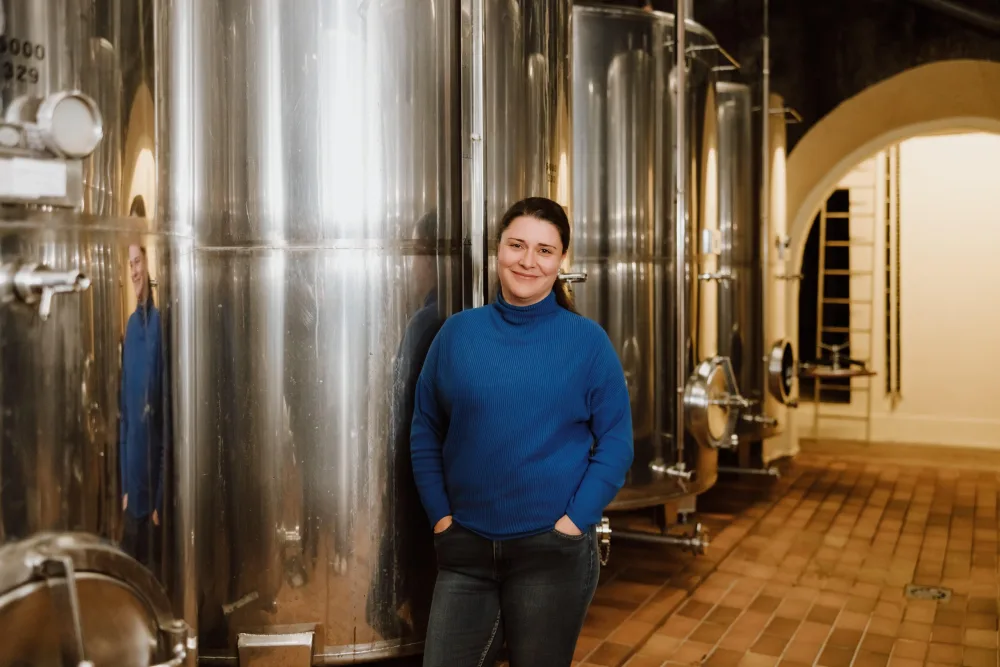
“The next generation drinks more consciously. Luxembourg can benefit from that.”
What Michèle Mannes and Anne Maddalon share is a deep respect for what already exists. Michèle brings the perspective of a landscape architect. For five years, she analysed landscapes; today, she sees the vineyard not as a monoculture but as a space for biodiversity. Sheep, roses, cover crops— dynamic touches, as she calls them. She is also determined to bring Auxerrois, a grape variety grown almost exclusively in Luxembourg, out of the shadows. “It is something truly special. I have never met anyone who didn’t like it.”
Anne manages the smallest estate among them, with just 4.6 hectares. She is gradually transitioning from conventional viticulture to organic farming, although she has deliberately chosen not to seek certification, with biodynamics as her ultimate goal. Her Rivaner ‘L’autre riv’, aims to elevate a grape variety that is often underestimated in Luxembourg.
Charlène Muller operates on an entirely different scale. As Cellar Master at Vinsmoselle, she processes up to 350 tonnes of grapes per site during harvest. Pure adrenaline, she says— because that is when everything is decided. At the same time, she is helping to drive the production of lower-alcohol wines: 10.5% rather than 12%. The next generation drinks more consciously, she believes, and Luxembourg is well positioned to benefit from that shift.
It would be tempting to turn this into a simple story. But it is not that simple.
What unites these women is less their gender than their moment in time. They belong to a generation that must deal with climate change, declining consumption and changing drinking habits—and they do so with a natural confidence that their fathers never had to develop.
Carved in stone
When it comes to sexism, there is no single answer either. And perhaps that is the most honest answer of all.
Charlène Muller, for example, says she hardly ever thinks about it. Then she pauses for a moment and adds: “Perhaps I have always felt that I had to achieve more than the men. But that is probably something subconscious.” And yes, if someone did not want to work with a woman, then they simply did not work together.
Not everyone sees it quite so pragmatically.
Lisa Vesque, for instance, has been mistaken for the secretary at her own winery. “Perhaps the assistant, but certainly not the person making the decisions.”
Michèle Mannes has had similar experiences during wine tastings, where she is sometimes assumed to be the salesperson. “If they still haven’t understood by the third time, then I simply stop caring.”
Corinne Kox of Domaine L & R Kox describes a reality that is often more subtle. Sexism exists, she says, but rarely in a direct way. More often, it happens behind people’s backs. And it can be difficult to separate it from age-related prejudice. “Is it because I’m a woman, or is it because I’m younger?” What she is really describing is an issue of upbringing: girls were simply never taught how to be the boss.
A story told by Isabelle Gales illustrates just how deeply rooted this mindset can be. Around fifteen years ago, when she became involved with Lucilivines to promote greater visibility for women in winegrowing, she encountered resistance from an unexpected source: other women. Some felt there was no need to make women more visible, almost as though doing so were a provocation. “That showed me how deeply ingrained the image of the male winemaker was here on the Moselle. Almost as if it had been carved in stone.”
Sometimes actions matter more than words. Anne Maddalon had to roll up her sleeves to keep the estate going. The work does not wait.
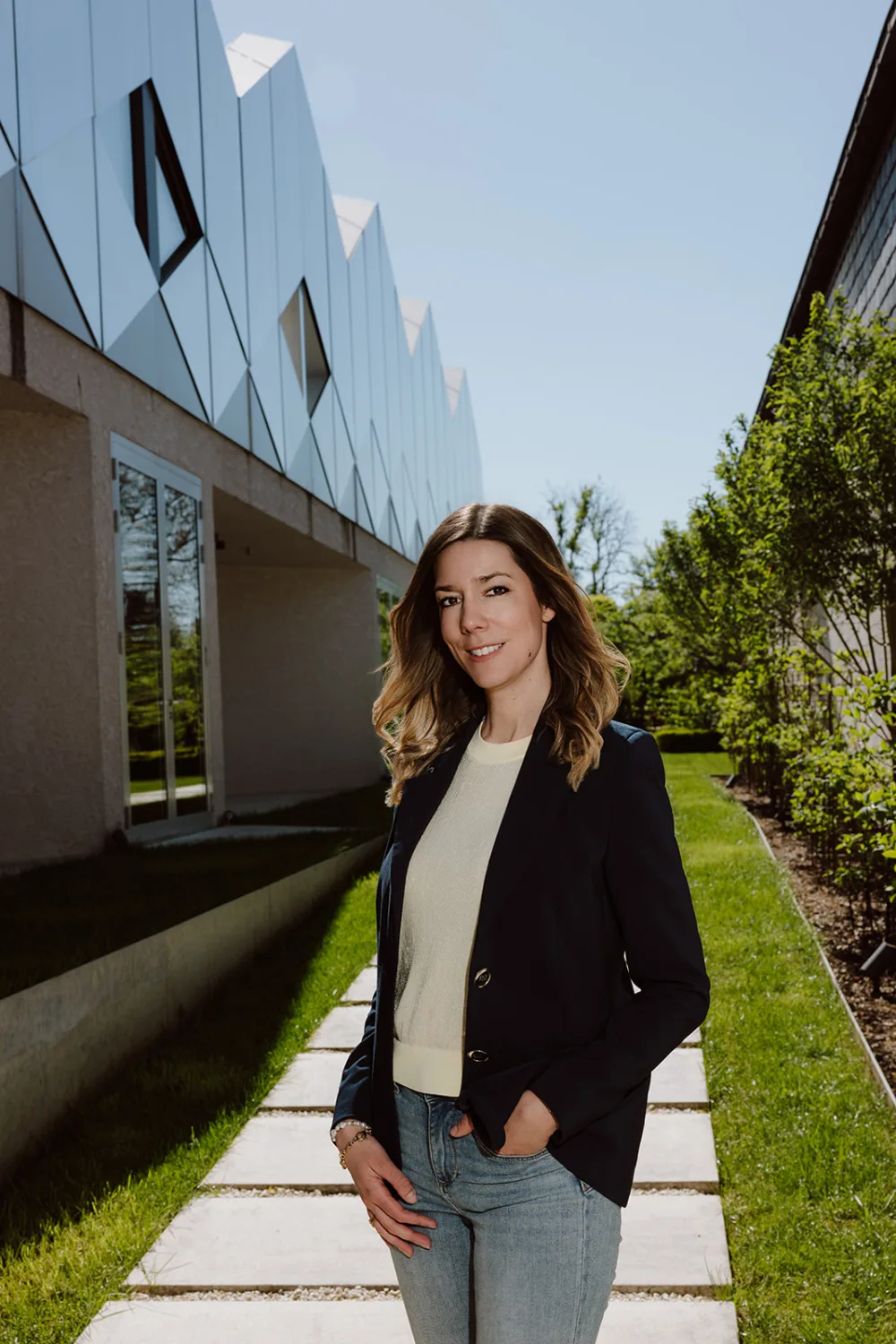
“WE WANT TO CARRY FORWARD WHAT HAS PROVEN ITS WORTH WHILE ALSO EXPLORING NEW PATHS.”
The situation becomes even clearer in Laurence Duhr’s story. It took eight years before her employees truly took her seriously. Until then, she sometimes resorted to small tricks— whispering an idea to a male colleague during meetings so that he could say it aloud. ”And then everyone applauds.” Her father, she says, finds this difficult to understand because, as a man, he is automatically taken seriously.
The change can also be seen across generations. At Domaine Sunnen-Hoffmann, Corinne Sunnen remembers the early days when a customer came to buy wine. She offered advice, but he replied: “No, I’d rather wait until Mr Sunnen is here.” The idea that a woman might know what she was talking about simply never occurred to him.
“Together, we want to move into a new era.”
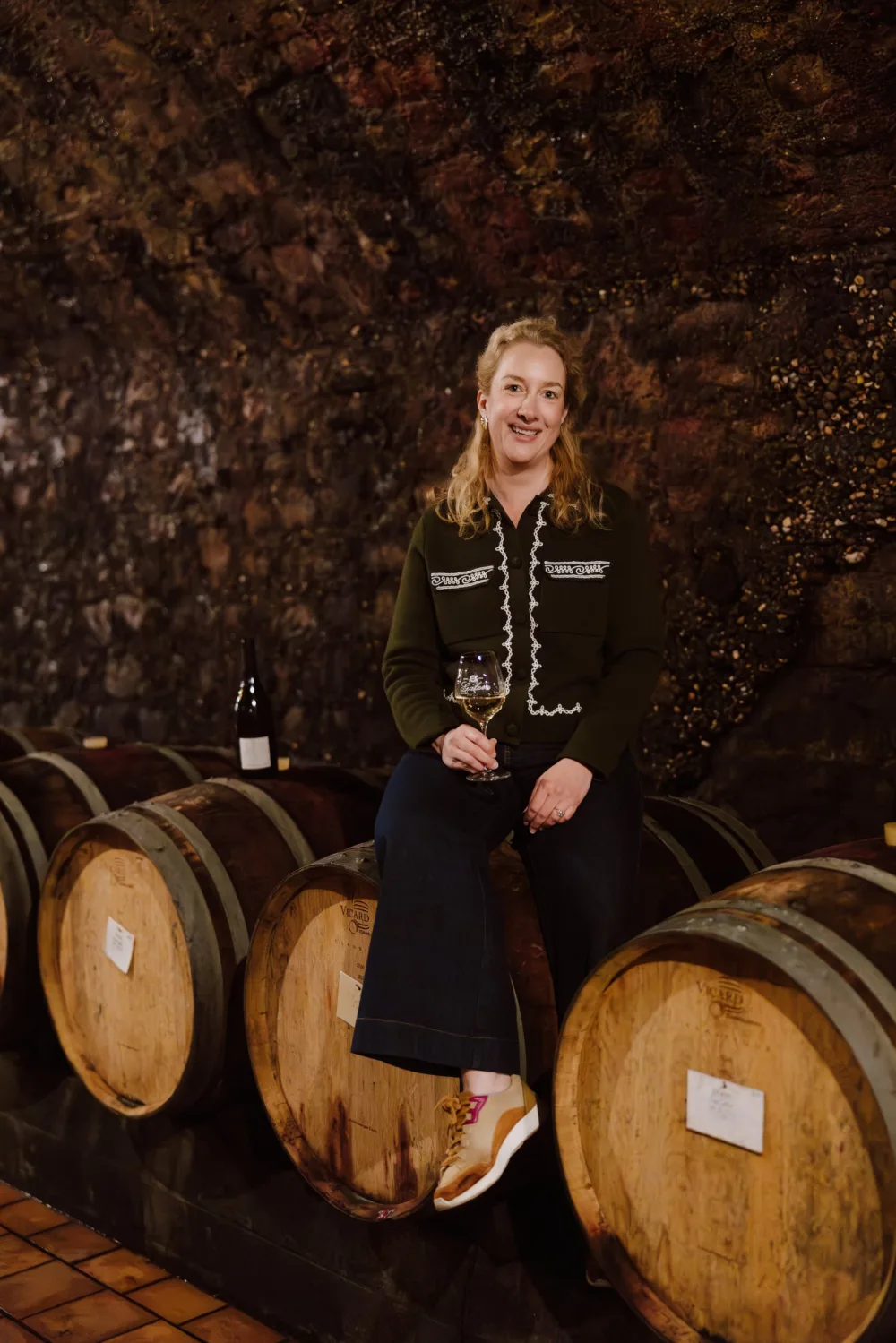
Today, Anouk Bastian believes things have changed considerably. She still remembers a time when aunts and mothers stood behind their husbands—actively involved in the work, but never at the forefront. “A woman here on the Luxembourg Moselle is now something completely natural.” What remains is a nuanced picture. Women who have found their place in an industry that itself has changed. And women who are honest enough to admit that some battles have not yet been won
As Corinne Kox puts it: “Of course there is sexism. It’s everywhere.” You do not have to experience it every day to know that it still exists.
Tradition and heritage
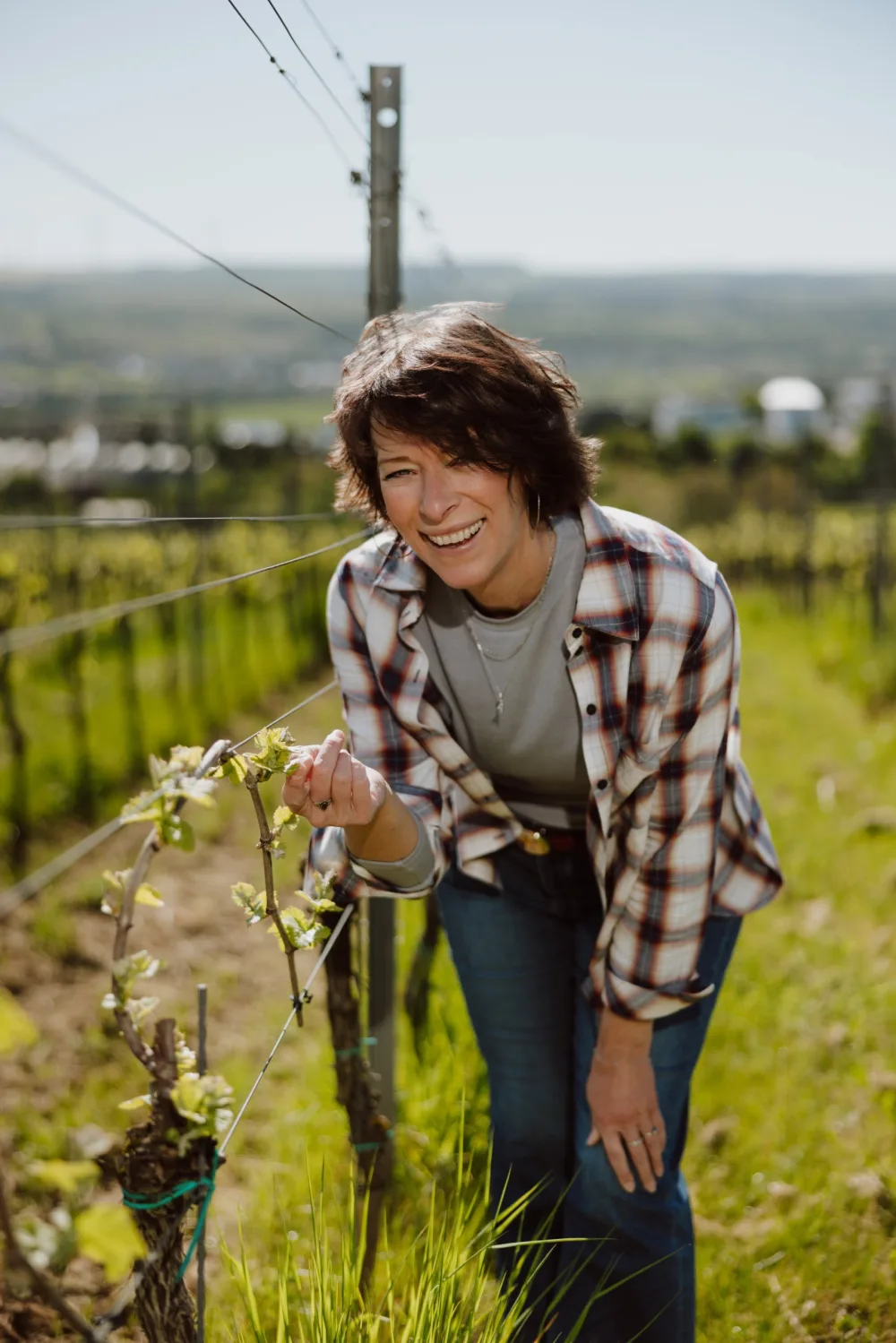
“A woman on the Luxembourg Moselle is now something completely natural.”
On the Moselle, tradition is often told as a straight line: grandfather, father, son. The reality has always been more complex.
At Domaine Sunnen-Hoffmann in Remerschen, mother and daughter sit at the same table—and that is far from a given. Corinne Sunnen took over the administration of the estate after her father passed away. Her daughter Marie joined the business years later, following her studies in oenology and internships in France. Today, they run the estate together. Corinne handles the accounts, organisation and wine tastings, while Marie is responsible for the vineyard and the cellar. “Everyone needs to have their own area and a little more authority within it,” says Marie, because that makes compromise easier. Their most important common ground was there from the very beginning: the conviction that organic viticulture was the right path. When the estate converted to organic farming in the late 1990s, neighbours looked at them sceptically and accused them of spreading diseases. Fifteen years later, that scepticism feels as though it belongs to another era.
At Domaine Sunnen-Hoffmann in Remerschen, mother and daughter sit at the same table—and that is far from a given. Corinne Sunnen took over the administration of the estate after her father passed away. Her daughter Marie joined the business years later, following her studies in oenology and internships in France. Today, they run the estate together. Corinne handles the accounts, organisation and wine tastings, while Marie is responsible for the vineyard and the cellar. “Everyone needs to have their own area and a little more authority within it,” says Marie, because that makes compromise easier. Their most important common ground was there from the very beginning: the conviction that organic viticulture was the right path. When the estate converted to organic farming in the late 1990s, neighbours looked at them sceptically and accused them of spreading diseases. Fifteen years later, that scepticism feels as though it belongs to another era.
Laurence Duhr knows the weight of a well-known family name too, although from a different perspective. As the daughter of Abi Duhr, expectations existed long before she even began. Colleagues told her she would never succeed anyway. The scepticism was twofold: she was both a woman and a psychologist rather than an oenologist. Yet she proved herself. What helped was the certainty that she was doing it for her own reasons. “It is my own path, and I have to reflect on it myself.”
Making this invisible part visible is perhaps the quietest, yet most lasting, transformation currently taking place on the Moselle. Isabelle Gales named her Pas de deux after the partnership she shares with her father. Anne Maddalon took over an estate that has belonged to her family since 1837—six generations, and now under female leadership for the first time. And Carole Bentz, representing the fourth generation, built upon the estate’s long-standing tradition while enriching it with new ideas and fresh momentum.
For a long time, tradition on the Moselle was something that was inherited and carried forward. Today, it is something that people claim for themselves—and reshape in their own way.
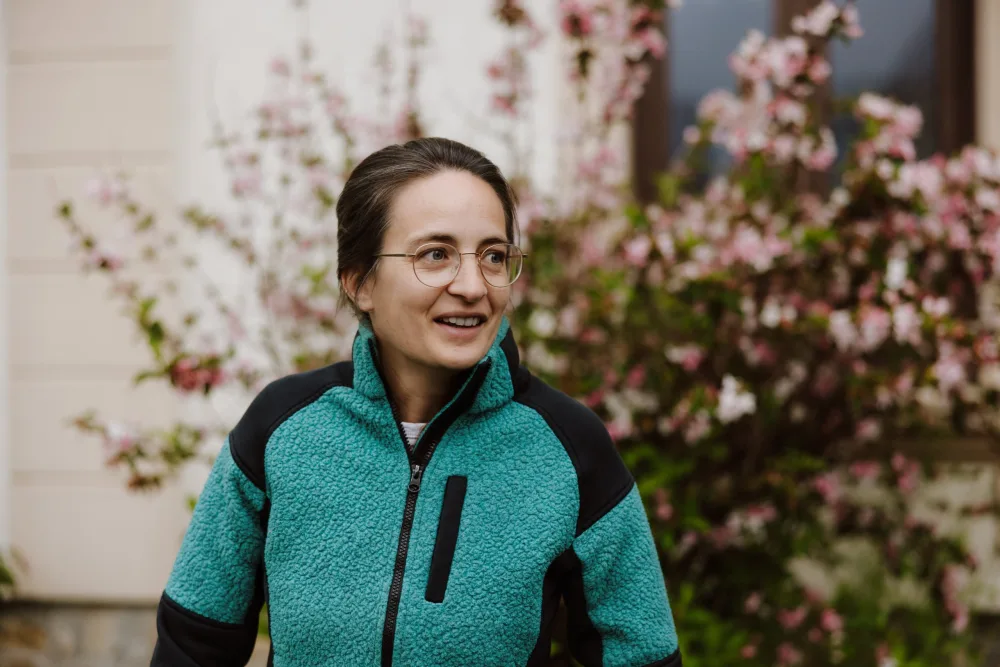
“Criticising is easy— why not try to do it better?”
Where the Moselle flows
The Moselle is changing, and the women winemakers know it. But above all, they see opportunity in that change. Charlène Muller, for example, is convinced that Luxembourg is becoming an ideal production zone for fresh white wines: lower alcohol, greater drinking pleasure—exactly what the next generation is looking for. Marie Kox hopes that Luxembourg will gain greater recognition on the international wine scene and that quality will increasingly be reflected in price. Anne Maddalon, meanwhile, would like to see greater visibility for the often-overlooked wines of the Moselle and wants to help promote them beyond the country’s borders.
Of course, challenges remain.
Michèle Mannes points to abandoned vineyard plots that gradually turn into scrubland, creating a patchwork landscape between carefully maintained vineyards. Laurence Duhr is concerned about what will become of these fallow areas and hopes that alternatives can be found to preserve the landscape. Corinne Kox of Domaine L & R Kox takes a more pragmatic view: in her opinion, the Moselle will become smaller in terms of production volume, and this trend is not limited to Luxembourg.
Anne Maddalon, enfin, aimerait offrir davantage de visibilité aux vins souvent méconnus de la Moselle et contribuer à les faire rayonner bien au-delà des frontières du Luxembourg.
Yet despite these challenges, all of them are looking ahead.
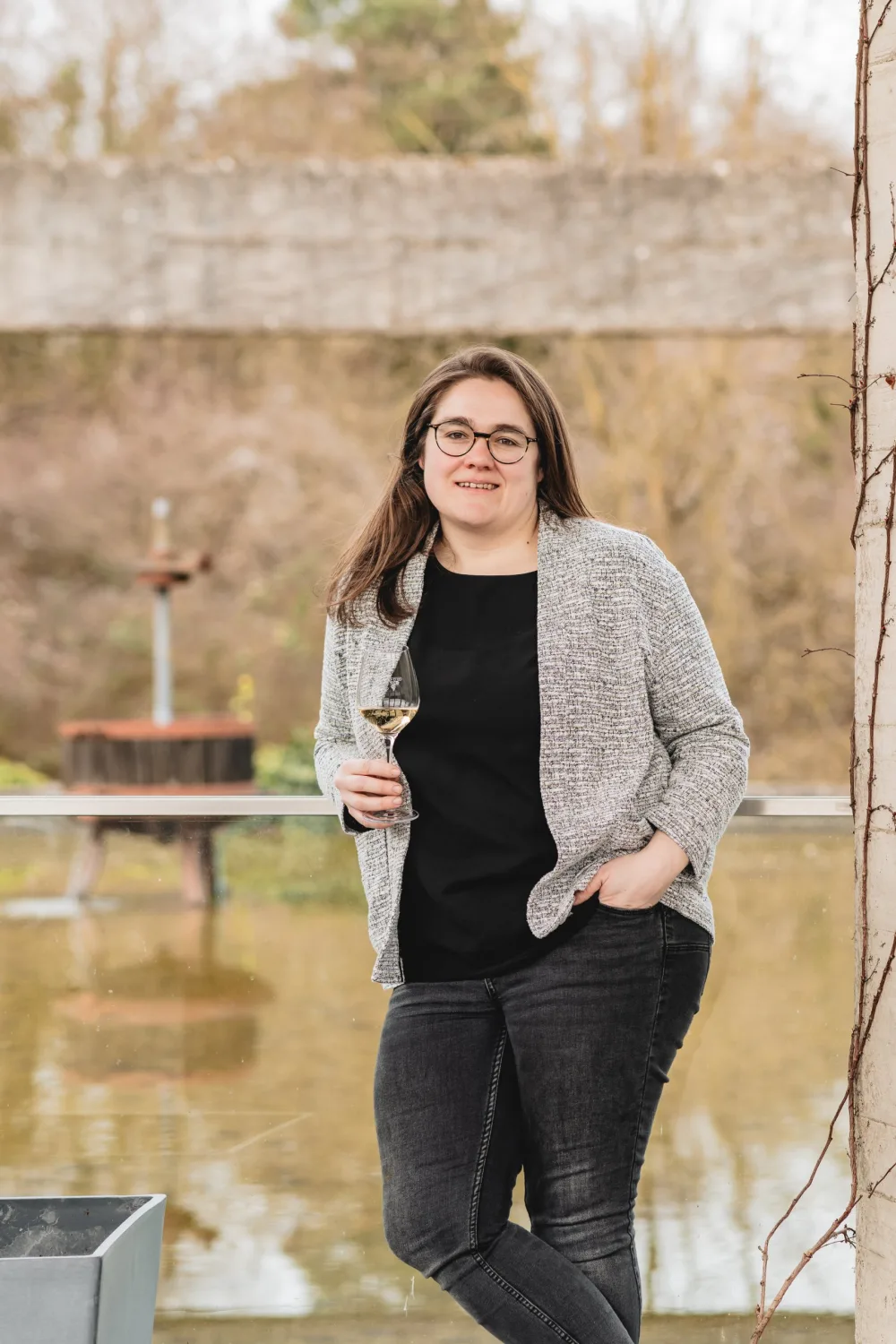
“I hope the Moselle will always remain as diverse as it is today.”
Anouk Bastian is already thinking about the next step: once more than fifteen professional women winemakers are working along the Moselle, she believes it will be possible to create a dedicated network for exchange across generations. “A vibrant region, full of energy and ideas,” as she describes it.
Lisa Vesque, perhaps the most pragmatic of them all, has a simpler wish: that “the Moselle will still be as diverse then as it is today
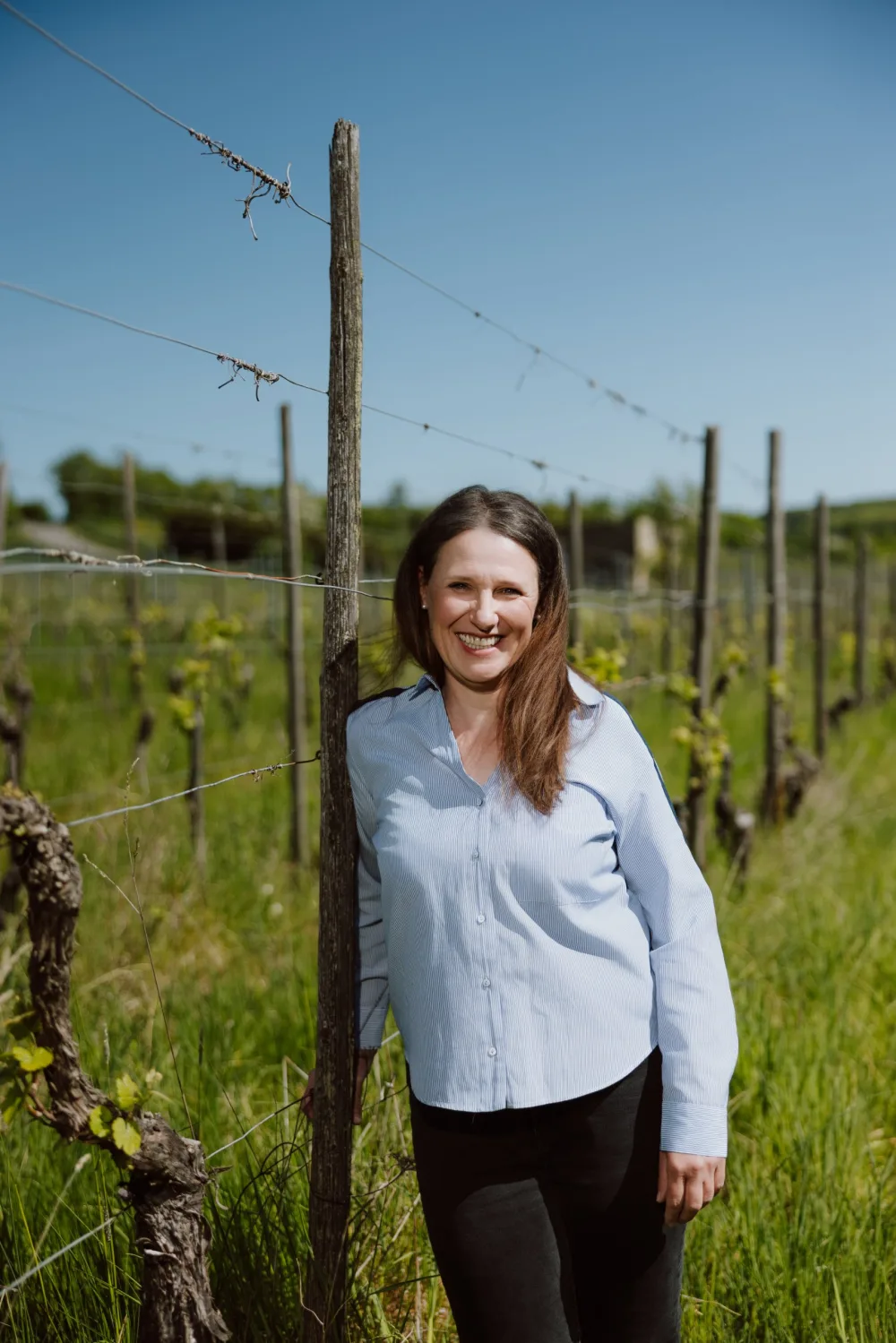
“I want to help make the wines of the Moselle known beyond our borders.”
Anouk Bastian knew it when she was ten years old. Lisa Vesque stood her ground against teachers who tried to discourage her from pursuing this profession. Carole Bentz brought fresh momentum to a winery steeped in tradition. Michèle Mannes disproved three arguments against her in a single breath. Isabelle Gales dances a Pas de deux into the future alongside her father. Corinne Kox turned criticism into a quiet revolution. Charlène Muller stayed for twenty years when she had only intended to stay for three months. Anne Maddalon found her place through hard work and perseverance. Marie Kox and Corinne Sunnen demonstrated patience over decades. And Laurence Duhr puts on her clown’s nose whenever the world becomes too serious.
It is an image that lingers. And it reflects what all eleven women describe in their own way: the Moselle demands everything from you—your body, your mind, and your patience. And even then, you still have to remain true to yourself.